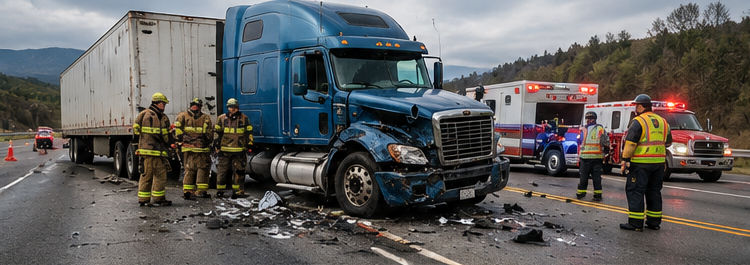
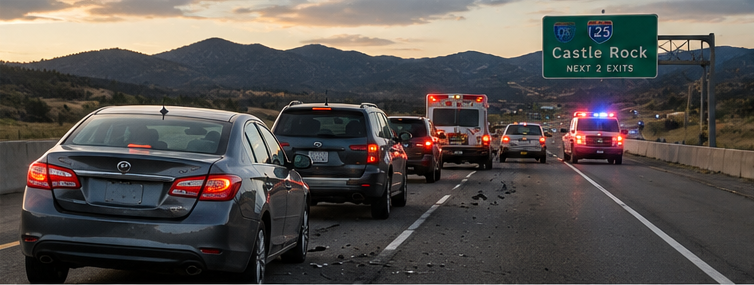
If a warehouse delivery truck hits you in Castle Rock, responsibility is rarely just about the driver

Warehouse delivery truck crashes often involve multiple companies, multiple insurance policies, and a stack of records that can disappear quickly. The question is not only who caused the impact, but who controlled the truck, the schedule, the load, and the safety decisions that led to the wreck. A set of Colorado truck accident attorneys can help you identify every responsible party and preserve evidence before it is overwritten or lost. Travis Legal Offices, LLC offers a free consultation and works on a contingency fee basis, so you do not pay attorney fees unless compensation is recovered.
What to do right after the crash
- Call 911, request medical evaluation, and make sure law enforcement creates an official report.
- Photograph the truck, any company markings, license plate, trailer information, and the delivery location or warehouse entrance if relevant.
- Collect witness names and numbers, and ask nearby businesses if they have exterior cameras facing the road.
- Write down what you saw before impact, including turn signals, lane position, lighting, weather, and any unusual load movement.
Who can be responsible in warehouse delivery truck accidents
The driver and the company behind the wheel
The driver is often the starting point, but the deeper question is who employed or controlled that driver at the time of the crash. Delivery routes may involve employees, contractors, leased vehicles, or layered relationships where one company dispatches and another maintains the truck. A company can be responsible when unsafe hiring, poor training, unrealistic scheduling, or weak supervision contributed to the wreck. Proving that link usually requires dispatch records, training files, and maintenance history, not just a crash report.
The warehouse, shipper, and loading chain
Warehouse delivery crashes can also trace back to how the load was prepared, staged, and secured before the truck ever left the dock. If cargo shifts, visibility is blocked, or weight is uneven, the driver may lose control during turns, braking, or lane changes. In some cases, the party responsible for loading or securing cargo can share responsibility when their work created a predictable hazard. That is why early investigation often focuses on bills of lading, dock logs, and who physically handled the freight.
How evidence turns liability into a clear story
Truck cases are evidence heavy because more money is usually at stake and companies are motivated to control the narrative early. The best outcomes come from showing exactly how a safety failure caused a real injury, with records that line up across time stamps. Video can disappear fast, and driver data can be overwritten if you wait too long. Your goal is to lock down proof while the scene and the records still match what happened.
Records that help pinpoint responsibility
- Dispatch details, delivery schedules, and route assignments that show timing pressure or missed rest.
- Vehicle inspection reports, maintenance logs, and repair history for brakes, tires, lights, and steering.
- Load documents such as bills of lading, dock logs, and any notes about weight, pallet condition, or securement.
- Electronic data such as GPS location, speed history, and any onboard camera footage if it exists.
Why safety rules matter in delivery truck liability

Many commercial delivery operations must follow safety standards that cover driver qualification, vehicle maintenance, and operational practices. When those rules are ignored, it can strengthen a claim because it shows the risk was known and preventable. The Federal Motor Carrier Safety Regulations are one example of widely used standards that can apply depending on the vehicle and operation. A strong case connects any rule violations to the specific chain of events that caused the crash and the injuries that followed.
What compensation can include after a serious truck crash
Warehouse delivery truck impacts often cause injuries that require more than a single clinic visit, especially when a larger vehicle transfers force into a smaller one. Claims can include medical bills, future care needs, lost income, and the day to day impact of pain, limited mobility, and reduced activity. Insurers typically evaluate value based on documentation, consistency, and whether the treatment timeline makes sense for the mechanism of injury. Motor vehicle injury cases often have a three year filing window in Colorado, so it helps to protect evidence early and keep your timeline organized.
Match the strategy to the right fit
The right strategy depends on whether the delivery truck was locally based, tied to a warehouse operation, or part of a larger commercial chain with multiple vendors. Some cases are resolved by proving clear fault and damages, while others require digging into contracts, policies, and who controlled safety decisions. If you treat it like a simple fender bender, you can miss the party with the meaningful coverage. A practical plan focuses on early evidence preservation, clean medical documentation, and identifying all insurance that may apply.
- If your collision happened in town and you want local guidance on next steps, start with a Castle Rock Colorado car accident lawyer who understands the roads and how claims move through Douglas County.
- If an insurer delays, denies, or underpays what is owed, a Colorado insurance bad faith lawyer can evaluate whether the claim is being handled unfairly.
Final checklist before you act
- Get medical care promptly and follow the treatment plan so your records match your symptoms.
- Save photos, witness contacts, and report details in one organized folder.
- Write down company names, unit numbers, delivery destination details, and anything you noticed about the load.
- Avoid recorded statements or broad releases until you understand who may be responsible and what coverage applies.
Responsibility after a warehouse delivery truck accident is about identifying which safety systems failed and who had the power to prevent the failure. When you act early, you can preserve records that often decide the outcome before negotiations even start. Travis Legal Offices, LLC is a Castle Rock based personal injury trial firm that prepares cases with the expectation that they may need to be proven in court. If you want a clear plan for next steps, schedule a free consultation and get answers tailored to your facts.