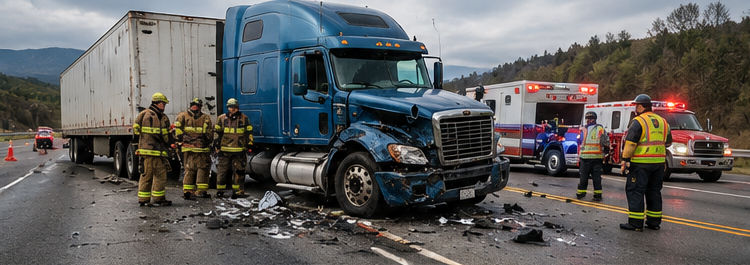
Some Castle Rock intersections generate far more crashes than most drivers realize, and the numbers show exactly where caution pays off.

Crash hotspots are not random in Castle Rock, and local crash analysis shows that a handful of signalized intersections carry a disproportionate share of risk. If you drive Founders Parkway, Plum Creek Parkway, Wilcox Street, or the shopping corridors near Highway 85, a few seconds of extra patience can matter. When a collision happens, a Castle Rock Colorado car accident lawyer can help you preserve evidence and sort out insurance issues before the story gets rewritten. This guide shares the latest published intersection ranking and explains how to use crash rate and traffic volume to make smarter driving choices.
Top 10 Castle Rock intersections by crash rate and traffic volume
- Plum Creek Parkway at the northbound Interstate 25 ramps: 131 total crashes, 32,585 average daily vehicles, crash rate 2.203.
- Front Street at Founders Parkway: 140 total crashes, 38,332 average daily vehicles, crash rate 2.001.
- Founders Parkway at Allen Way: 168 total crashes, 57,135 average daily vehicles, crash rate 1.611.
- Meadows Parkway at Highway 85: 96 total crashes, 32,754 average daily vehicles, crash rate 1.606.
- Factory Shops Boulevard at New Memphis Court: 98 total crashes, 37,438 average daily vehicles, crash rate 1.434.
- Factory Shops Boulevard at Meadows Parkway: 121 total crashes, 50,340 average daily vehicles, crash rate 1.317.
- Plum Creek Parkway at the southbound Interstate 25 ramps: 54 total crashes, 22,766 average daily vehicles, crash rate 1.300.
- Fifth Street at Founders Parkway: 66 total crashes, 29,448 average daily vehicles, crash rate 1.228.
- Wilcox Street at the northbound Interstate 25 ramps: 33 total crashes, 16,959 average daily vehicles, crash rate 1.066.
- Wolfensberger Road at Park Street: 33 total crashes, 20,251 average daily vehicles, crash rate 0.893.
What these numbers actually mean for drivers
Crash rate shows risk relative to how busy an intersection is
Total crashes alone can be misleading because a very busy intersection should have more conflicts simply due to volume. That is why the ranking above uses a crash rate tied to traffic flow, which helps compare intersections more fairly. In practical terms, a higher crash rate means the intersection is producing more crashes than you would expect for its daily traffic. When you see a high crash rate paired with high daily volume, you get a location where risk is both frequent and repeatable. Those are the intersections where defensive driving habits deliver the biggest real world payoff.
Traffic volume tells you when small mistakes become expensive
Average daily traffic helps explain why certain corridors feel stressful during commute windows and weekend shopping surges. More vehicles mean shorter gaps, more lane changes, and more rushed turns, which is the perfect recipe for rear end and turning movement crashes. Volume also magnifies the cost of a single distracted decision because a chain reaction can involve multiple vehicles. If you drive these corridors daily, the goal is to reduce decision pressure by picking lanes early and avoiding last second turns. A calm approach consistently beats an aggressive one when traffic is dense.
Castle Rock crash facts that explain the pattern
In 2022, Castle Rock recorded 721 reported crashes, compared with 804 in 2021 and 708 in 2020. That works out to roughly one reported crash every 13 hours, which makes intersections and queueing areas a daily risk zone rather than a rare event. The most common crash type in 2022 was rear end collisions at 27% of all crashes, followed by turning movement collisions at 19%. Broadsides represented 13% and sideswipes represented 14%, which aligns with what drivers see where lanes merge and signals cycle quickly. These shares point to predictable behaviors, like following too closely, rushing a gap, and drifting during lane changes.
Four collision patterns to watch for at the top locations
- Rear end crashes spike when queues form near ramp signals, so leave extra following distance and expect sudden stops.
- Turning movement crashes rise where left turns compete with heavy through traffic, so wait for clean gaps and avoid squeezing on yellow.
- Broadside crashes happen when someone runs a red or misjudges speed, so pause briefly on green and scan cross traffic.
- Sideswipes appear where drivers change lanes late for ramps and turn lanes, so protect space and avoid riding side by side.
Where the data comes from and what it can and cannot tell you
The intersection ranking above is drawn from the Town of Castle Rock Motor Vehicle Crash Facts Report, which pairs crash history with average daily traffic to calculate crash rates for signalized intersections. The published table reflects the most recent multi year intersection analysis available in a public format, and it is designed to identify where safety improvements may produce the biggest impact. If you are trying to isolate crash counts from January 2026 through today, understand that intersection level figures are commonly released after statewide processing and quality checks are complete. For business decisions, route planning, or legal questions, the best approach is to use the published ranking as your baseline and then request the exact date range data from the appropriate agency when needed.
How to drive these intersections with fewer close calls

Start by reducing last second decisions, because late lane changes and rushed turns are the common thread across most high crash locations. Plan your turn one or two signals ahead and stay in your lane unless you have a wide, clear opening. Treat every green light as a conditional green, especially at high volume crossings, and look for the vehicle that is still rolling into the intersection. If you need to turn left, avoid creeping forward if your exit lane is blocked, because that is how turning movement conflicts escalate. Over time, these habits cut your risk without adding much travel time.
Match the strategy to the right fit
Some intersection crashes resolve quickly, but many turn into disputes about signal phase, turning right of way, or who changed lanes first. The higher the speed and the heavier the traffic, the more likely injuries and vehicle damage add up fast. A smart approach is to treat your claim like a documented project, with photos, witness names, medical records, and a clear timeline of symptoms and work impact. That level of organization makes it harder for an insurer to minimize what happened. If the situation feels complex, choose help that matches the problem instead of guessing your way through it.
- If you were hurt in a collision and need help valuing the claim and proving fault, review your options with a Colorado car accident lawyer.
- If your insurer delays, underpays, or misrepresents coverage, speak with a Colorado insurance bad faith lawyer about whether claim handling crossed the line.
Final checklist before you act
- Write down the exact intersection, direction of travel, and lane position as soon as you can safely do it.
- Take wide and close photos of vehicle positions, signal heads, skid marks, and visible injuries before traffic clears the scene.
- Get medical evaluation promptly and keep every visit summary, bill, and a daily symptom log.
- Do not sign releases or give detailed recorded statements until you understand your injuries and the full cost picture.
Knowing the most crash prone intersections in Castle Rock helps you drive with more margin and fewer surprises. The goal is not to fear these corridors, it is to recognize where volume and decision pressure make mistakes more likely. If you were hit at one of these locations, strong documentation and timely care protect both your health and your claim value. Travis Legal Offices can help you sort out liability, coverage, and next steps so you can move forward with clarity. When you combine local data with smart habits, you give yourself the best chance to avoid the next collision.