

Travis Legal Offices represents crash victims on US Highway 85, Highway 67, and the rural roads surrounding Sedalia. Our Castle Rock office is 10 miles south. We have litigated in the 23rd Judicial District at the Douglas County Courthouse for over 26 years. We understand the unique challenges of rural crash cases: evidence preservation on roads with no surveillance cameras, crash reconstruction on highways with no witnesses, and documenting the impact that delayed emergency response had on our clients’ outcomes. If your crash happened near Sedalia, you need an attorney who understands that the remoteness of the location is itself part of the harm.
Sedalia does not have a hospital. It does not have a police department. It does not have a traffic light. What it does have is US Highway 85, a high-speed two-lane highway where commercial trucks and commuter traffic share the road with nothing between oncoming lanes but a painted yellow line. When a crash happens on Highway 85 near Sedalia, the injured do not walk to an emergency room. They wait. They wait for a Douglas County Sheriff’s deputy to arrive from a patrol area that spans hundreds of square miles. They wait for an ambulance to reach them from a fire station that covers 100 square miles of territory. And then they wait again during the 10 to 20 mile transport to the nearest hospital that can treat their injuries.
In a high-speed collision, minutes matter. Every minute without medical intervention is a minute in which internal bleeding continues, a minute in which a traumatic brain injury worsens, a minute in which a spinal cord injury that might have been survivable becomes one that is not. The medical literature is unambiguous on this point: delayed treatment in severe trauma cases increases both mortality and the severity of permanent disability. When you crash in Sedalia, the clock starts running against you the moment the impact occurs, and the rural geography of this community means that clock runs longer than it would anywhere else on the I-25 corridor.
Call (303) 766-8766 for a free consultation.
US Highway 85 is the primary corridor through Sedalia and the source of the community’s most dangerous crashes. The road is a two-lane highway with no median barrier, carrying a mix of commercial trucks, commuters traveling between Denver and the I-25 corridor communities to the south, motorcyclists heading to the mountain roads, and local residents trying to get to their driveways. The speed limit is highway-grade, the shoulders are minimal, and the only thing separating northbound from southbound traffic is a painted center line.
Fatal crashes on US 85 near Sedalia have been documented in 2005, 2006, 2007, and 2010. A 2005 crash at the US 85 and Highway 67 intersection involved 5 vehicles and 13 people. The crash types on this corridor are predictable and severe: head-on collisions when a driver crosses the center line, rear-end crashes when a vehicle slows to turn left into a driveway or side road and is struck by following traffic traveling at full speed, and truck-versus-car impacts where the weight differential between a loaded commercial vehicle and a passenger car produces catastrophic injuries even at moderate speeds.
Under Colorado law (C.R.S. § 42-4-1008), every driver must maintain a following distance that allows them to stop safely. On a two-lane highway where a car ahead may brake suddenly for a left turn into an unmarked driveway, following distance is not a suggestion. It is the margin between a near-miss and a fatality. When a commercial truck driver following too closely at 55 miles per hour rear-ends a sedan that slowed for a turn, the physics of the impact are devastating: a loaded semi-truck can weigh 80,000 pounds. A passenger car weighs 3,500. That is a 23-to-1 weight ratio. The car does not stand a chance.
Highway 67 meets US 85 at a T-intersection in Sedalia, creating a convergence point where mountain highway traffic merges onto a high-speed corridor. SH 67 connects Sedalia to the communities southwest toward Deckers and the South Platte River canyon, carrying recreational traffic, motorcyclists, and local residents. The T-intersection requires drivers on SH 67 to stop and merge into US 85 traffic that is traveling at full highway speed, a maneuver that requires accurate gap judgment. When a driver misjudges the gap, or when visibility is reduced by fog, rain, or the angle of the morning sun, the result is a broadside or angular collision at highway speed.
Highway 67 also crosses Union Pacific and BNSF railroad lines in Sedalia, adding railroad-crossing hazards to the corridor. Railroad crossing crashes are among the most catastrophic on any road because the weight differential between a train and a vehicle is absolute. Colorado law (C.R.S. § 42-4-707) requires drivers to stop when warning signals are activated, but crossing-gate malfunctions, sight-line obstructions, and driver impatience contribute to crashes at these crossings. If a defective crossing gate or obscured sight line contributed to a railroad crossing crash near Sedalia, the railroad company and the entity responsible for maintaining the crossing equipment may share liability alongside the driver.
Southwest of Sedalia, the junction of SH 105 (Perry Park Road) and SH 67 connects the Sedalia area to Palmer Lake and Monument. This route carries traffic between communities along two-lane mountain roads with elevation changes, tight curves, and variable weather conditions. The Palmer Divide’s influence on weather at this elevation produces ice, fog, and sudden snow squalls that transform these roads from scenic corridors into traps. A driver who takes a curve at the posted speed limit on a dry July afternoon will find that the same speed is dangerously fast on a January morning when black ice coats the road surface.
Sedalia has no hospital, no police department, and no traffic lights. US Highway 85 carries high-speed commercial truck and commuter traffic through the community on a two-lane road with no median barrier. Fatal crashes have been documented in 2005, 2006, 2007, and 2010. The nearest trauma center is 10 to 20 miles away. Sources: CDOT; Douglas County Sheriff’s Office.
In suburban communities like Castle Rock, Highlands Ranch, or Lone Tree, an ambulance can reach a crash scene in minutes and transport the patient to a trauma center in additional minutes. Total time from impact to emergency physician: often under 20 minutes. In Sedalia, that timeline stretches dramatically.
The Douglas County Sheriff’s Office patrols the Sedalia area from headquarters in Castle Rock, 10 miles south. The fire district serving Sedalia covers vast territory with limited apparatus. When a crash occurs on US 85, the 911 call triggers a dispatch chain that must cover distances measured in tens of miles, not city blocks. By the time the first emergency vehicle arrives, stabilizes the patient, and begins transport to AdventHealth Castle Rock (10 to 15 miles south) or Sky Ridge Medical Center (10 to 15 miles north), the total time from crash to treatment can exceed 45 minutes or more. For the most critical injuries, when internal bleeding or a tension pneumothorax is killing the patient in real time, that delay can be the difference between survival and death.
Flight for Life Colorado provides air ambulance service that can dramatically reduce transport times for the most severe cases. A helicopter can reach Sedalia and transport a patient to Swedish Medical Center (Level I Trauma Center) in Englewood far faster than a ground ambulance. But helicopter activation requires a severity assessment that takes time, and weather conditions on the Palmer Divide frequently ground air operations when fog, wind, or snow make flying unsafe. On those days, the ground ambulance is the only option, and the clock keeps running.
Travis Legal Offices understands how delayed emergency response affects both medical outcomes and legal claims. When we represent a client injured in a rural crash near Sedalia, we obtain the dispatch records, the ambulance run sheets, the helicopter activation logs, and the hospital arrival records. We document every minute between the crash and the start of treatment. If the delay contributed to the severity of our client’s injuries, that delay becomes part of the damages calculation. The defense does not get to ignore the geographic reality that made the injuries worse simply because the crash happened in a place with limited emergency infrastructure.
Motorcyclists travel to Sedalia from all over the Front Range for its roads. Curves, elevation, and scenery can be found on highways such as highway 67 that travels southwest toward Deckers, Perry Park Road which leads to Palmer Lake, and a number of other roads in the foothills that provide the same types of features as the other roads. The area’s natural beauty is what makes it so dangerous for motorcyclists. Gravel on curves, wildlife crossing the road, elevation changes causing a quick change in the weather, and very little visibility when approaching a blind turn are just a few of the things that cause motorcycle accidents
And when a motorcycle crash happens on a rural mountain road, the response time problem is compounded by the accessibility problem: some crash sites are difficult for ambulances to reach quickly, and the patient may be lying on the road surface for extended periods before help arrives.
Colorado recorded 162 motorcycle fatalities in 2024, a 23% increase over the prior year. Motorcycle crashes produce disproportionately severe injuries because riders have no structural protection: no airbags, no crumble zones, no seatbelts. The injuries are typically orthopedic (fractures, joint destruction), neurological (traumatic brain injuries from impacts that overwhelm helmet protection), and soft-tissue (road rash that can require skin grafting). When these injuries occur on a remote road where emergency response is delayed, the severity is magnified.
If you were injured in a motorcycle crash on Highway 67, Perry Park Road, or any mountain road near Sedalia, the case involves considerations that a typical car-accident firm may not address: helmet use and comparative fault arguments, the adequacy of road maintenance and gravel clearing, wildlife-crossing signage, and sight-line analysis around curves. Travis Legal Offices has handled motorcycle injury cases throughout the I-25 corridor and understands how to counter the biases that juries sometimes bring to motorcycle cases. The law does not assign lesser value to a motorcyclist’s injuries because the rider chose two wheels instead of four.
Sedalia is home to Cherokee Ranch & Castle, a Scottish-style castle built between 1924 and 1926, designed by the architect of Red Rocks Amphitheater, sitting on 3,441 acres and listed on the National Register of Historic Places. Daniels Park, a Denver Mountain Park also listed on the National Register, is home to a herd of American bison and draws visitors for its sweeping views of the Front Range. These landmarks generate visitor traffic on roads that were not designed for it.
Visitors unfamiliar with the area drive at speeds appropriate for suburban roads, not rural highways. They slow unexpectedly to look at the castle or the bison. They make sudden turns into unmarked access points. They misjudge the speed of oncoming traffic on US 85 when pulling out of Daniels Park Road. Every unfamiliar driver on a high-speed rural highway is a variable that increases crash risk for everyone else on the road.
If you were struck by a visitor who was unfamiliar with the road conditions near Sedalia, or if you are a visitor who was injured on these unfamiliar roads, Travis Legal Offices can help. The legal analysis is the same regardless of whether you live in Sedalia or were visiting for the day: someone’s negligence caused your injuries, and Colorado law entitles you to compensation for those injuries.
Sedalia is in Douglas County, which falls under the 23rd Judicial District. Personal injury lawsuits are filed at the Douglas County Courthouse, 4000 Justice Way, Castle Rock, CO 80109. Phone: (720) 437-6200. This is the same courthouse that handles cases from Castle Rock, Highlands Ranch, Lone Tree, Parker, Larkspur, Castle Pines, and Franktown.
Travis Legal Offices is located in Castle Rock, 10 miles from Sedalia and minutes from the Douglas County Courthouse. We have litigated in the 23rd Judicial District for over 26 years. When we say we are your local attorneys for a Sedalia crash, we mean it literally: the courthouse where your case will be heard is the courthouse we walk to from our office at 333 Perry Street.
Call 911 immediately. For crashes on US 85 or SH 67, also dial *CSP (*277) from your cell phone to reach Colorado State Patrol dispatch. State Patrol has primary jurisdiction on these highways and will respond alongside the Douglas County Sheriff’s Office.
If you can safely exit your vehicle, move away from the road surface. US 85 is a high-speed two-lane highway with limited shoulders. Vehicles approaching at 55 miles per hour or faster have limited time to see and react to a crash scene, especially around curves, in fog, or at night. Secondary crashes, where a following vehicle strikes people or vehicles already stopped at a crash scene, are a documented killer on rural highways. In November 2024 near Monument, a pickup truck struck drivers exchanging information on the shoulder of I-25 during a closure, killing one person. The lesson is clear: standing on or near a high-speed road after a crash puts you at immediate risk of being struck again.
Be aggressive about preserving evidence. In rural locations, there is less likely to be the same type of crash scene (e.g., a crash in front of a school, a business, or at a light) as found in suburban areas with a large number of businesses and homes. Take photographs of all aspects of the crash scene: where each vehicle was positioned; what the road surface looked like; whether or not there were skid marks on the road; what the line of sight was for both vehicles in both directions; the condition of the shoulders; and any potential road defects such as potholes, gravel or water that may have caused the crash.
Document the distance you could see an oncoming vehicle when you turned left into its path by taking photographs of the sight-line in both directions from the point at which you made your left turn into the oncoming traffic. Do not wait to get medical help if you need it. This includes taking an ambulance if necessary. Document your injuries through the physicians while the injuries are still recent and documented in their medical records.
Contact Travis Legal Offices at (303) 766-8766. We are 10 miles from Sedalia. We can be at the crash scene, at the hospital, or at your home the same day.
Travis Legal Offices represents injured people throughout the I-25 corridor and surrounding communities in Douglas County, Arapahoe County, Elbert County, and El Paso County. Click any location below to learn about the specific roads, intersections, and crash patterns in your community.
Our office is located at 333 Perry Street, Suite 203, in Castle Rock, at the intersection of Perry Street and 4th Street on the second floor. We also meet clients at their homes, hospitals, or any convenient location throughout the corridor. If you cannot come to us, we will come to you.
Sedalia is a community of roughly 100 people in a ZIP code area of about 3,800. It was founded in 1882 and has never incorporated. The average household income in the broader area is $185,137, reflecting the affluent rural-residential character of the ranches and acreages that define the landscape. Cherokee Ranch & Castle sits on 3,441 acres overlooking the valley. Daniels Park’s bison herd has grazed the same hillside for generations. This is not a suburb. It is a place where people chose to live precisely because of its distance from the density and traffic of the metro area.
And then US Highway 85 carries that density and traffic directly through their front yard. The same Santa Fe Drive that runs through Englewood and Littleton, the same corridor that produces crashes at the most dangerous intersections in those cities, extends south through Sedalia as a two-lane road where the speeds are higher and the shoulders are narrower. The trucks that supply the outlet stores in Castle Rock, the commuters who live south of town and work in Denver, the motorcyclists heading to the mountain passes, all of them pass through Sedalia on a road that was not designed for the volume it now carries.
When a crash on that road destroys someone’s health, their livelihood, or their life, the legal response should not be diminished because the community is small or the crash scene is rural. The injuries are real. The medical bills are real. The lost income is real. The pain is real. Travis Legal Offices provides the same trial-ready representation to Sedalia crash victims that we provide to clients from Castle Rock, Lone Tree, or Englewood. Our office is 10 miles away. The courthouse is in our backyard. And the fight for your case starts the moment you call.
Call Travis Legal Offices at (303) 766-8766. The consultation is free. The distance between your crash and our office is shorter than the distance between your crash and the nearest hospital.
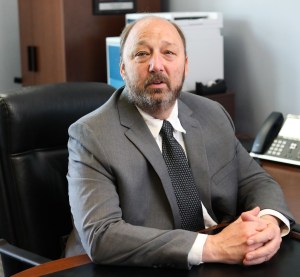
Todd A. Travis founded Travis Legal after 26+ years representing injured Coloradans. His career includes complex personal injury work on both plaintiff and defense sides. That experience taught him exactly how insurance companies assess cases and which attorneys they undervalue. He’s tried cases to jury verdict and built this firm on a simple principle: catastrophic injury cases require genuine attention, not assembly-line processing. When Todd’s name appears on a demand letter, insurance adjusters respond differently. He answers client calls directly.

Jordan M. Travis joined the firm after law school, bringing a perspective shaped by growing up around trial preparation and legal strategy discussions. His generational approach complements the firm’s established reputation and adds contemporary research methods to how they build cases. Together, Todd and Jordan offer something larger firms can’t replicate: deep trial experience combined with current techniques and the capacity to give each client genuine attention. When you contact Travis Legal, you’re speaking with both attorneys. The same people who will manage your case from investigation through trial.
When you call, you reach Todd or Jordan. Not a receptionist. Not an intake specialist. Your actual attorney.
We work on contingency, meaning you pay nothing unless we win. The consultation is free. Given Colorado’s three-year statute of limitations, acting quickly matters. Evidence deteriorates. Video footage gets deleted. Witnesses relocate. Company records vanish.
Call (303) 766-877 today to talk to us about your case for free.
Travis Legal Offices, LLC
333 Perry Street, Suite 203
Castle Rock, Colorado 80104
(303) 766-8766 info@travislegaloffices.com