

Travis Legal Offices represents Elizabeth residents injured on Highway 86 and the rural roads of Elbert County. Our Castle Rock office is approximately 15 miles southwest, and we have spent over 26 years litigating in the 23rd Judicial District, which covers both Douglas County and Elbert County. Elizabeth’s cases are filed at the Elbert County Courthouse in Kiowa, and we know the courthouse, the judges, and the road that got you there.
Elizabeth is growing faster than the road that serves it can handle. The town’s population surged roughly 80% between 2020 and 2024, from 1,694 to approximately 2,773 residents. Outside Magazine named it one of the fastest-growing mountain towns in the nation in November 2024. Developers are building. Families are moving in while schools are also being built. And every morning, 80% of those residents get in their cars and drive 40.7 minutes on average to reach their jobs in the Denver metro, nearly all of them funneling onto a single road: Highway 86.
Highway 86 is a two-lane undivided highway with no median barrier. Elbert County residents have called it an “asphalt disaster” because of potholes and crumbling road edges that have not kept pace with the traffic volume the growth has produced. The road carries 11,000 to 13,000 vehicles per day through terrain that sits at 6,476 feet on the Palmer Divide, where winter weather is more severe than the communities at lower elevations. On December 29, 2025, a pickup veered into oncoming traffic on Highway 86 about 7 miles east of Kiowa and caused a deadly head-on collision. There was no median barrier to stop it. There was no physical separation between the pickup and the oncoming car. There was nothing but a painted yellow line, and the painted yellow line did not save anyone.
Call (303) 766-8766 for a free consultation.
Highway 86 was built to serve a rural ranching community. It is now the sole lifeline for one of the fastest-growing towns in Colorado. The math is simple and dangerous: Elizabeth’s population has grown 80% since 2020, but Highway 86 has not added a single lane. The road still carries 11,000 to 13,000 vehicles per day on two lanes with no median barrier, no rumble strips between opposing lanes, limited shoulders, and a pavement surface that Elbert County residents have publicly described as an “asphalt disaster” plagued by potholes and deteriorating edges.
CDOT has acknowledged the problem. Asphalt reconstruction through Elizabeth and a full bridge replacement on the west end of Kiowa have been scheduled for 2025 to 2026. But reconstruction of existing pavement does not add capacity. It does not add a median barrier. It does not add the passing lanes or turn lanes that would reduce the conflict points producing head-on and rear-end collisions. The road will be smoother. It will not be safer in any structural sense. The fundamental design problem, two-lane undivided highway carrying volumes it was never intended to handle, will remain after the reconstruction is complete.
The defining danger on Highway 86 is the head-on collision. When oncoming traffic is separated by nothing but a painted center line on a high-speed road, every distracted driver, every drowsy commuter at the end of a 40-minute drive, every driver who swerves to avoid a pothole, every teenager who drifts while looking at a phone is one crossed line away from a head-on impact at a combined closing speed of 110 miles per hour or more.
On December 29, 2025, that is exactly what happened about 7 miles east of Kiowa: a pickup veered across the center line into oncoming traffic and caused a deadly head-on collision. The crash reconstructs itself in the data. A vehicle traveling eastbound at 55 mph meets a vehicle traveling westbound at 55 mph. The combined closing speed is 110 mph. The energy of the impact is not the sum of the two speeds; it is proportional to the square of the velocity. The forces involved in a 110 mph combined-speed head-on collision are catastrophic. Survival is uncertain. Walking away is nearly impossible.
Under Colorado law, a driver who crosses the center line into oncoming traffic has violated C.R.S. § 42-4-1005 (driving on the right side of the road). That violation is negligence per se, meaning the plaintiff does not need to prove that crossing the center line was unreasonable. The statute establishes the standard of care, and the violation establishes the breach. The only questions remaining are causation and damages, and in a head-on collision, causation is self-evident.
Highway 86 does not bypass Elizabeth. It runs directly through the town, carrying the same 11,000 to 13,000 daily vehicles through the downtown area where residents cross the street to reach shops, the post office, and the Elizabeth Brewing Company. The speed transition from highway to town is abrupt, and not every driver makes it. Vehicles entering Elizabeth from the east or west carry highway speed into a zone where pedestrians, turning vehicles, and side-street traffic create conflict points that a high-speed two-lane road is not designed to manage.
The Highway 86 and Elbert Road area adds rural intersections with limited visibility and high-speed traffic. These intersections lack the signal controls, dedicated turn lanes, and acceleration/deceleration lanes that suburban intersections provide. A driver turning left from Elbert Road onto Highway 86 must judge the gap in traffic traveling at 55 mph from both directions, with sight lines that may be limited by terrain, vegetation, or the angle of the road. A misjudged gap produces a T-bone or angular collision at highway speed.
Elizabeth’s population has surged 80% since 2020, but Highway 86 has not added a single lane. The two-lane undivided highway carries 11,000 to 13,000 vehicles daily with no median barrier. A deadly head-on crash occurred on December 29, 2025. Elbert County residents have called the road an “asphalt disaster.” CDOT has scheduled reconstruction for 2025-2026. Sources: CDOT; Elbert County; Outside Magazine.
The average Elizabeth resident commutes 40.7 minutes to work, one of the longest average commutes in the region. Approximately 80% of Elizabeth’s workforce drives to the Denver metro area every day. That means the majority of the town’s adult population spends over 80 minutes per day on the road, most of it on Highway 86, a road that is structurally inadequate for the traffic it carries.
The commute creates two daily surge periods on Highway 86: a westbound morning rush as Elizabeth residents head toward I-25 and the Denver metro, and an eastbound evening rush as they return. During these surges, the road’s two-lane capacity is overwhelmed. Faster drivers attempt to pass slower vehicles on a road with limited passing zones, creating overtaking maneuvers into oncoming traffic. Frustrated commuters follow too closely, reducing their stopping distance below what C.R.S. § 42-4-1008 requires. Fatigued drivers returning from a full workday and a 40-minute drive lose focus, and on a road with no median barrier, a momentary loss of focus can put a vehicle into the oncoming lane.
The legal significance of the commute pattern is that it eliminates the “unexpected conditions” defense. A driver who has made the Highway 86 commute every workday for months or years cannot credibly claim they did not know the road was narrow, congested, poorly maintained, or prone to weather-related hazards. They knew. They drove it anyway. And when they rear-ended the car ahead of them because they were following too closely during the evening rush, the familiarity with the road’s conditions becomes evidence of negligence, not a defense against it.
Elizabeth has no hospital. The AdventHealth primary care clinic at 240 South Elizabeth Street provides routine medical services, but it is not an emergency facility and cannot treat trauma patients. When a crash on Highway 86 produces serious injuries, the patient must be transported 15 miles west to AdventHealth Parker (Level II Trauma Center, (303) 269-4000) or 15 miles southwest to AdventHealth Castle Rock (Level III Trauma Center, (720) 455-5000). For the most critical injuries, air ambulance transport to a Denver-area Level I trauma center may be required.
The travel time is important for the same reasons that it is important in Sedalia: each moment between the time of the accident and when a patient receives definitive care is a moment when a potentially treatable injury becomes an injury that will not be able to be treated. While a surgeon may be able to stop internal bleeding while a patient is being treated in the operating room, it will continue to bleed during the ambulance trip. Similarly, each additional minute of elevated intracranial pressure that occurs due to a traumatic brain injury prior to the time when early intervention would have mitigated the damage increases the severity of the injury. The medical literature refers to this as the “Golden Hour”, or the time immediately following a traumatic injury that treatment has a dramatic effect on the outcome of the injury. In cases involving Elizabeth crash victims, a large amount of this Golden Hour is used up traveling.
In each of Travis Legal Offices’ cases, the timeline from accident to treatment is documented. Each case includes the 911 record, the time stamps provided by dispatch, the information contained within the ambulance run sheet, the time of arrival at the hospital and the time to treatment. If the delay in transportation of the injured party caused their injuries to be worse than they otherwise would have been, this evidence is presented to the jury as part of the overall damages picture for the client. The defendant who was responsible for the accident does not receive a discount on his damages simply because the accident occurred in a community where there is no hospital.
Elizabeth sits at 6,476 feet on the Palmer Divide, the ridge that separates the South Platte River drainage to the north from the Arkansas River drainage to the south. The Palmer Divide influences weather in ways that catch drivers off guard. Storms that drop rain in Denver produce ice in Elizabeth. Fog that is light in Castle Rock can be impenetrable on Highway 86 east of town. Snow accumulates faster and lingers longer at this elevation than in the communities along I-25 at lower elevations.
A typical day of commuting from Elizabeth to the Denver metropolitan area usually involves driving away from home in much worse weather than you will be experiencing when you arrive at work. When you get home in the evening, the roadways are usually even more hazardous than when you departed. On many mornings, leaving your house in moderate snowfall may make for a 40 minute commute on an icy road with “black ice” forming in the tire tracks of previous cars. As the sun sets in the evening, returning to the Highway 86 corridor at the time of a temperature drop below freezing and moisture on the pavement turning to “black ice,” the last thing you want to see is another car crossing the center line. The almost 1200 foot elevation difference between Elizabeth (6,476 feet) and the Denver Metropolitan area (5,280 feet), creates two vastly different types of weather which require different levels of care by the motorist.
Colorado’s comparative fault law (C.R.S. § 13-21-111) means that a driver who fails to adjust their speed for weather conditions bears fault for the resulting crash. Driving the posted speed limit is not a defense when conditions require slower speeds. The posted limit is the maximum for ideal conditions. When the road surface is icy, when visibility is reduced, when the pavement is degraded, the duty of reasonable care requires speeds well below the posted limit. A driver traveling at 55 mph on Highway 86 in a snowstorm is not obeying the speed limit. They are violating their duty to drive at a speed that is reasonable for the conditions.
Elizabeth is in Elbert County, not Douglas County. This distinction matters because it determines where your case is filed. Elbert County shares the 23rd Judicial District with Douglas County and Lincoln County, but Elbert County cases are heard at the Elbert County Combined Court in the Elbert County Courthouse, 751 Ute Avenue, Kiowa, CO 80117. Phone: (303) 621-2131. Kiowa is the county seat, approximately 10 miles east of Elizabeth on Highway 86.
Travis Legal Offices has extensive experience in the 23rd Judicial District. Our Castle Rock office handles Douglas County cases at the Douglas County Courthouse and Elbert County cases at the Kiowa courthouse. We understand the differences between the two courthouses, the two sets of judges, and the two jury pools. An Elbert County jury is drawn from a rural, agricultural, and ranching community. The jurors who will hear your case live on the same roads you drive, face the same Highway 86 hazards you face, and understand the same rural realities you live with every day. That familiarity is an advantage when your case involves a crash on a road the jurors themselves know is dangerous.
Call 911 immediately. For crashes on Highway 86, also dial *CSP (*277) from your cell phone. Colorado State Patrol has jurisdiction on state highways and will respond alongside the Elizabeth Police Department (for crashes within town limits) or the Elbert County Sheriff’s Office (for crashes outside town). Elizabeth PD has only 9 officers, so State Patrol may be the primary responder for Highway 86 crashes.
Accept ambulance transport if you need it. Do not refuse the ambulance because the nearest hospital is 15 miles away and you think you can drive yourself later. The insurance company will use the refusal against you, arguing that if your injuries were serious, you would have accepted emergency transport. The gap between the crash and your first medical treatment becomes a weapon the defense uses for the duration of the case. Close that gap by accepting the ambulance if you need it.
Document how the roads were at the time of the wreck. This is a well-known problem with the pavement on Highway 86. If a pothole, crumbling road edge, missing pavement markings or other type of road defect was involved in your wreck, take pictures of it. Take measurements, too. Note where it was located in reference to the nearest landmark, mile marker, or intersection. The fact that CDOT has scheduled reconstruction on this stretch of road indicates that they have acknowledged the poor condition of the road. However, since the governmental agency responsible for maintaining the road, would share responsibility if the defect that caused your wreck occurred prior to their reconstruction reaching that part of the road; under the Colorado Governmental Immunity Act (C.R.S. § 24-10-106) a governmental agency is potentially liable for a hazardous condition of a public highway if they knew about the hazard and did nothing. Elbert County residents have publicly called the road an “asphalt disaster,” which constitutes knowledge.
Contact Travis Legal Offices at (303) 766-8766. We will come to Elizabeth, to the hospital in Parker or Castle Rock, or meet you at our Castle Rock office.
Elizabeth is not a suburb that was built around a highway interchange. It is a real town with a real history. The historic Main Street features antique stores, vintage shops, and the Carriage Shoppes in a 5,000-square-foot building that reflects the community’s roots. The Elizabeth Stampede Rodeo has been a summer tradition for generations, with rodeos, a parade, an antique car show, and country music. This is a town where people know their neighbors, where the elementary school principal recognizes every family, and where the volunteer fire department is staffed by people who live on the same roads they protect.
It is a community that chose to grow. The families who have moved to Elizabeth since 2020 came for the same reasons the town’s original residents stayed: affordable land, clean air, mountain views, good schools, and the feeling of belonging to a place with character. The problem is that the infrastructure the community depends on, Highway 86, was designed for the Elizabeth that existed before the growth, not the Elizabeth that exists now. The road that carries 80% of the town’s workforce to their jobs every morning was built for ranch trucks and local traffic, not for 11,000 commuter vehicles per day.
Travis Legal Offices represents Elizabeth residents because the injuries on this road are not abstract. They happen to real people in a real community where a crash on Highway 86 is personal. Everyone in town knows someone who has been in a wreck on that road. Everyone has a story about a close call. When we take a case from Elizabeth, we understand that context, and we present it to the Elbert County jury that lives it.
Travis Legal Offices represents injured people throughout the I-25 corridor and surrounding communities in Douglas County, Arapahoe County, Elbert County, and El Paso County. Click any location below to learn about the specific roads, intersections, and crash patterns in your community.
Our office is located at 333 Perry Street, Suite 203, in Castle Rock, at the intersection of Perry Street and 4th Street on the second floor. We also meet clients at their homes, hospitals, or any convenient location throughout the corridor. If you cannot come to us, we will come to you.
Elizabeth chose growth. Growth brought new families; new business; new energy. Outside magazine took notice. Developers took notice. Families that moved to Elizabeth noticed the mountain view; the community spirit; the schools; the affordable housing. Nobody chose the highway system that never met the demands of growth and the demand for traffic from the families who were invited to grow along with the town.
Every head-on collision; every rear end crash; every rollover; as a result of a driver trying to avoid a pothole on the edge of a deteriorating road; is an example of the failure of the towns’ infrastructure to meet the needs of the growing population. The people that get into crashes on Highway 86, are not reckless drivers. They are mostly commuters, doing what the town’s growth plan said they would be doing. They live in Elizabeth, and commute to the Denver Metro. The road was designed to accommodate them. It has not.
Travis Legal Offices represents the people on that road. We are 15 miles from Elizabeth in Castle Rock, and we have litigated in the 23rd Judicial District for over 26 years. We understand Highway 86 because we have driven it, we have investigated crashes on it, and we have presented its dangers to juries. If you have been hurt on this road, call (303) 766-8766. The consultation is free. The fight starts immediately.
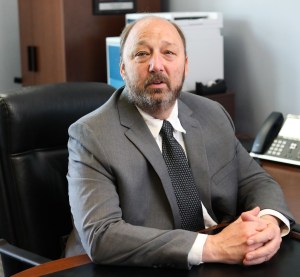
Todd A. Travis founded Travis Legal after 26+ years representing injured Coloradans. His career includes complex personal injury work on both plaintiff and defense sides. That experience taught him exactly how insurance companies assess cases and which attorneys they undervalue. He’s tried cases to jury verdict and built this firm on a simple principle: catastrophic injury cases require genuine attention, not assembly-line processing. When Todd’s name appears on a demand letter, insurance adjusters respond differently. He answers client calls directly.

Jordan M. Travis joined the firm after law school, bringing a perspective shaped by growing up around trial preparation and legal strategy discussions. His generational approach complements the firm’s established reputation and adds contemporary research methods to how they build cases. Together, Todd and Jordan offer something larger firms can’t replicate: deep trial experience combined with current techniques and the capacity to give each client genuine attention. When you contact Travis Legal, you’re speaking with both attorneys. The same people who will manage your case from investigation through trial.
When you call, you reach Todd or Jordan. Not a receptionist. Not an intake specialist. Your actual attorney.
We work on contingency, meaning you pay nothing unless we win. The consultation is free. Given Colorado’s three-year statute of limitations, acting quickly matters. Evidence deteriorates. Video footage gets deleted. Witnesses relocate. Company records vanish.
Call (303) 766-877 today to talk to us about your case for free.
Travis Legal Offices, LLC
333 Perry Street, Suite 203
Castle Rock, Colorado 80104
(303) 766-8766 info@travislegaloffices.com